McGowan MG202A
Monterey, CA 93940
Email Address
ybutt@miis.edu
Phone Number
831.647.4619
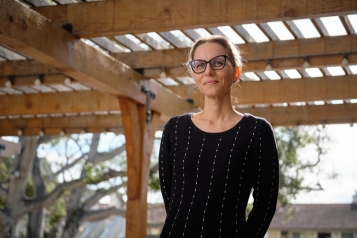
Yousaf Butt, PhD.
Research Professor and Scientist-in-residence at the James Martin Center for Nonproliferation
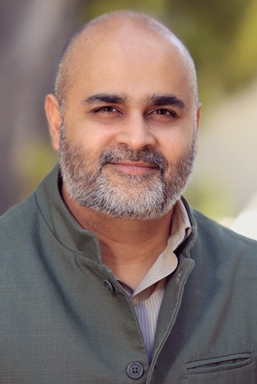
Yousaf Butt is Research Professor and Scientist-in-residence at the James Martin Center for Nonproliferation at the Monterey Institute of International Studies. Yousaf taught a course in “Space Security” in Fall 2012, and carrying out research in nuclear and space security issues, as well as in missile defense and Iran’s nuclear program. His upcoming Spring 2013 course is a seminar on missiles, missile defense and nonproliferation. Previously, he was a scientific consultant to the Federation of American Scientists and a physicist in the High-Energy Astrophysics Division at the Harvard-Smithsonian Center for Astrophysics. He was on the instrument operations team responsible for the main focal plane instrument aboard NASA's orbiting Chandra X-ray Observatory from 1999-2004. He has also been a fellow in the Committee on International Security and Arms Control at the National Academy of Sciences and a research fellow in the Global Security Program at the Union of Concerned Scientists.
He has authored numerous Op-eds and many papers on technical aspects of national and global security issues, as well as on astrophysics and nuclear physics.
Education
Ph.D. Nuclear Physics. Yale University
Dual B.S. Mechanical Engineering, Physics. Massachusetts Institute of Technology.
Publications and Articles
New York Times
The Delusion of Missile Defense
Not Ready for a 'Solar Sandy'
ForeignPolicy.com
The Rial World
A Queen for a Queen
Stop the Madness
Billions for Missile Defense, not a Dime for Common Sense
What Missile Defense?
The Christian Science Monitor
By not lifting sanctions, West and Obama are helping Iran enrich uranium.
An Israeli strike won't delay Iran's nuclear weapons program. It will start it.
A 'new START' to an arms race between the US and Russia?
Obama, Congress should push NATO missile defense program off 'fiscal cliff'
The National Interest
Goldilocks Missile Defense
Debunking the Missile-Defense Myth
Are Sanctions a Fatwa on Iran?
Politico
Why Russia's anti missile defense
Courses
Courses offered in the past four years.
▲ indicates offered in the current term
▹ indicates offered in the upcoming term[s]
IPOL 8604 - Sem: Space Security
1957 simultaneously opened the space age and started the Cold War space race. This course will be an overview of Space Security with an emphasis on current developments and how technical issues impact space security and space policy-making. The value of space to global economic development and security has grown exponentially since 1957. Space “touches” every one of us in our daily lives—we use satellites for communications via telephony and the Internet, for banking transfers, for GPS, for agricultural management, for weather prediction, for disaster relief and telemedicine among many other applications. At the same time, the space environment has become more vulnerable to degradation and disruption. Space debris pollution and the increase in the number of satellites on orbit have raised the risks of satellite collisions. Intentional Anti-Satellite (ASAT) tests can also create tremendous amounts of debris. Crowding in certain highly-desirable orbits has led to friction among states wishing to utilize those orbits. And, of even greater concern is the fact that as more states seek to gain military and political advantage through the use of space assets, the risk of conflict in space has grown. Indeed, the International Telecommunication Union has noted in recent years an alarming up-tick in instances of deliberate interference with satellites. The twin issues of securing space for peaceful purposes and the prevention of an arms race in outer space (PAROS) have been on the international agenda for decades. However, only in the past few years have efforts to craft multilateral discussions begun to ripen into action. In 2010 the UN General Assembly passed a resolution to establish a Group of Governmental Experts on transparency and confidence-building measures for space, the Committee on the Peaceful Uses of Outer Space launched work on developing best practices to ensure the long-term sustainability of the space environment, the European Union began discussions with non-EU states on its proposed international Code of Conduct for space, and Russia and China intensified efforts to promote within the Conference on Disarmament the negotiation of a treaty to prevent the weaponization of space. This course will review the legal, technical and political opportunities and challenges to various approaches and activities and pre-view possible future accords.
Fall 2012 - MIIS