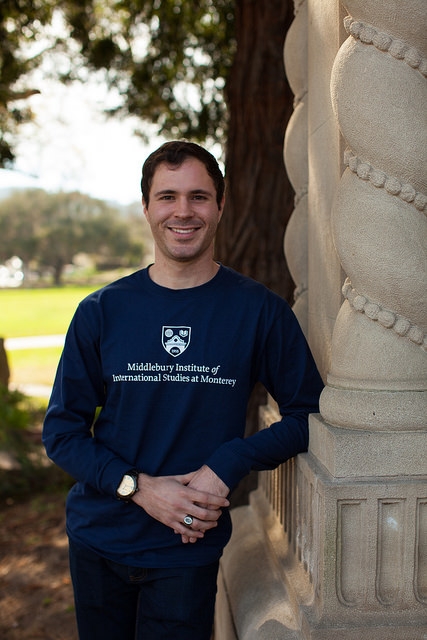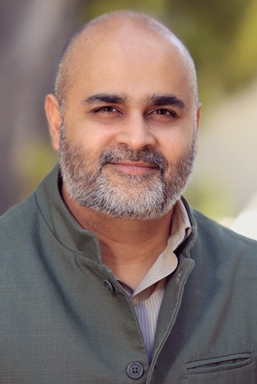
Stephen Schwartz
Adjunct Professor
Stephen I. Schwartz is the editor of the Nonproliferation Review, the journal of the James Martin Center for Nonproliferation Studies. He is the author, most recently, of Nuclear Security Spending: Assessing Costs, Examining Priorities (Carnegie Endowment for International Peace, 2009).
From 1998 to 2005, Mr. Schwartz served as publisher and executive director of the Bulletin of the Atomic Scientists, the public interest magazine best known as the keeper of the iconic and symbolic minutes-to-midnight “doomsday clock.” From 1994 to 1998, he was a guest scholar with the Foreign Policy Studies Program at the Brookings Institution, where he directed the US Nuclear Weapons Cost Study Project.
Before joining Brookings, Mr. Schwartz was the Washington representative for the Alliance for Nuclear Accountability—a national network of more than thirty organizations addressing nuclear weapons production and environment, health, and safety issues surrounding the Department of Energy’s nuclear weapons complex—and the first legislative director for nuclear campaigns at Greenpeace USA.
A regular commentator and analyst, Mr. Schwartz has appeared on “60 Minutes,” BBC World News, National Public Radio’s “All Things Considered” and “Talk of the Nation,” Public Radio International’s “The World” and “To the Point,” American Public Media’s “Marketplace” and “Marketplace Morning Report,” CNN, and in several documentaries broadcast on the History Channel, the National Geographic Channel, and the Learning Channel.
Expertise
History and cost of US nuclear weapons; nuclear weapons research, development, testing, production, and deployment; nuclear strategy; command, control, communications, and intelligence (C3I); continuity of government plans and facilities; ballistic missile defense; nuclear proliferation; nuclear arms control and disarmament; environmental contamination from nuclear weapons production and testing; congressional oversight of nuclear weapons
Publications
Nuclear Security Spending: Assessing Costs, Examining Priorities (2009).
“Congressional Oversight of US Nuclear Weapons,” Nuclear Threat Initiative Issue Brief (October 2008).
“Warheads Aren’t Forever,” Bulletin of the Atomic Scientists (September/October 2005).
Foreword to The Doomsday Scenario: The Official Doomsday Scenario Written by the United States Government During the Cold War (2002).
Editor and co-author, Atomic Audit: The Costs and Consequences of U.S. Nuclear Weapons Since 1940 (1998).
“The New Nuke Chorus Tunes Up,” Bulletin of the Atomic Scientists (July/August 2001).
“Scientist, Fisherman, Gardner…Spy?,” Bulletin of the Atomic Scientists (November/December 2000).
“Outmaneuvered, Outgunned, and Out of View,” Bulletin of the Atomic Scientists (January/February 2000).
“A Very Convenient Scandal,” Bulletin of the Atomic Scientists (May/June1999).
Education
B.A., Sociology (summa cum laude and college honors) with a minor in Politics, University of California at Santa Cruz
Courses
Courses offered in the past four years.
▲ indicates offered in the current term
▹ indicates offered in the upcoming term[s]
NPTG 8523 - Wks:US Nuclr Weapns Hist &Cost
This workshop explores how and why the United States spent more than $7 trillion to build 70,000 nuclear weapons during the Cold War, conduct more than 1,000 nuclear tests, and deploy and maintain a worldwide network of delivery systems, sensors, and communications assets capable of unleashing (or defending against) unimaginable destruction. Key developments and turning points in the history of the U.S. nuclear weapons program will be discussed, and the substantial human health, environmental, and economic costs of the testing, production, and deployment of U.S. nuclear weapons will be quantified and assessed, along with the effectiveness of efforts to keep secret large parts of the program. The ongoing and anticipated future costs of U.S. nuclear weapons will also be discussed. Basic knowledge of nuclear weapons and the Cold War is helpful but not essential.
Spring 2013 - MIIS
WKSH 8523 - Wks:US Nuclr Weapns Hist &Cost
This workshop explores how and why the United States spent more than $7 trillion to build 70,000 nuclear weapons during the Cold War, conduct more than 1,000 nuclear tests, and deploy and maintain a worldwide network of delivery systems, sensors, and communications assets capable of unleashing (or defending against) unimaginable destruction. Key developments and turning points in the history of the U.S. nuclear weapons program will be discussed, and the substantial human health, environmental, and economic costs of the testing, production, and deployment of U.S. nuclear weapons will be quantified and assessed, along with the effectiveness of efforts to keep secret large parts of the program. The ongoing and anticipated future costs of U.S. nuclear weapons will also be discussed. Basic knowledge of nuclear weapons and the Cold War is helpful but not essential.
Spring 2010 - MIIS, Spring 2011 - MIIS, Spring 2012 - MIIS