McGowan 200-C
Email Address
ghahn@miis.edu
Phone Number
831.647.3535
Language(s)
Русский
Related Links
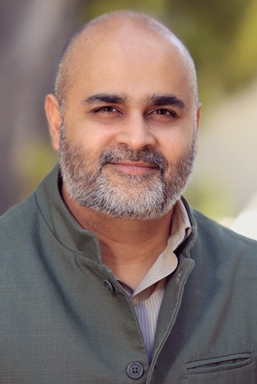
Gordon Hahn
Adjunct Professor and Researcher of Monterey Terrorism Research and Education Program
1. What is it that you are most passionate about?
I am most passionate about Russian politics, history and culture and the war against global jihadism.
Gordon M. Hahn is the author of Russia’s Islamic Threat (Yale University Press, 2007) which was named an "Outstanding Academic Title" for 2007 by the Association of College and Research Libraries (ACRL) and the American Library Asssociation (ALA) in their CHOICE Current reviews for Academic Libraries. He also wroteRussia’s Revolution From Above, 1985-2000: Reform, Transition and Revolution in the Fall of the Soviet Communist Regime (Transaction Publishers, 2002), and numerous scholarly and analytical articles on politics, Islam, and jihadism in Russia. He has taught at Stanford, St. Petersburg State (Russia), Boston, American, San Jose State, and San Francisco State Universities and has been both a Visiting Fellow at the Hoover Institution and the George F. Kennan Institute for Advanced Russian Studies.
Dr. Hahn received a BA and MA from Boston College and in 1995 a PhD from Boston University. He has spent three years teaching and researching in Russia, including more than a year researching the archives of the Communist Party of the Soviet Union’s Central Committee. From 1997-2000 Dr. Hahn conducted over 50 interviews with former Soviet officials on the end of the Cold War for a joint project sponsored by Stanford University, the Hoover Institution, and the Gorbachev Foundation in Moscow. He conducts research and teaches on Islam and Politics in Russia and Eurasia, Russian domestic and foreign policy, international relations in Eurasia, regime transformation theory, nationalism, and Islamism in Eurasia. He is currently a main researcher and editor of Islam, Islamism, and Politics in Eurasia Report, a forthcoming multi-monthly on the MonTREP website.
Recent Accomplishments
- Publishing several articles predicting and detailing in Post-Soviet Affairs on the political thaw in Russia during the presidency of Dmitry Medvedev and its implications for democratic regime transformation either by revolutionary of transitional modes, See Gordon M. Hahn, “Perestroika 2.0: Towards Non-Revolutionary Regime Transformation in Russia?,” forthcoming in Post-Soviet Affairs, 28, 6 (November-December 2012) and Gordon M. Hahn “Medvedev, Putin, and Perestroika 2.0,” Demokratizatsiya, 18, 3 (Summer 2010): 228-259.
- Published “The Caucasus Emirate Jihadists: The Security and Strategic Implications,” groundbreaking research on the development of the Caucasus Emirate jihadi network and its changing ties to Al Qa`ida and the global jihadi revolutionary alliance in Stephen J. Blank, ed., Russia’s Homegrown Insurgency: Jihad in the North Caucasus (Carlisle Barracks, PA: U.S. Army War College Strategic Studies Institute, October 2012), pp. 1-98.
- Published Russia’s Islamic Threat (New Haven and London: Yale University Press, 2007) which detailed the early and intermediate development of global jihadism in Russia, including the ideology, tactics, strategy, goals, and organizational structure of the Caucasus-based Jihadist network. Russia’s Islamic Threat was named an ‘Outstanding Academic Title’ for 2007 by the Association of College and Research Libraries (ACRL) and the American Library Association (ALA) in their ‘Choice’ Current Reviews for Academic Libraries. Anatol Lieven, professor at King’s College, notes: “Dr. Hahn’s work on this subject entitles him to be regarded as one of the leading experts in the world not only on the Islamist threat as such, but on the entire field of Russia’s Muslim-majority regions, their internal politics, and relations between them and the federal centre in Moscow.” The Army War College’s Stephen Blank has referred to me as the leading American expert on “the Chechen wars” (more precisely, the Caucasus jihadists).
- Founding the Islam, Islamism and Politics in Eurasia Report (IIPER) in 2009 and publishing IIPER at the Center for Strategic and International Studies in Washington, DC since September 2011.
- Appointment as a Senior Associate (Non-Resident) at the Center for Strategic and International Studies in Washington, DC since September 2011.
Expertise
Russian Studies
Political Science
Islam and Politics in Russia and Eurasia
Russian Domestic and Foreign Policy
International Relations in Eurasia
Regime Transformation Theory
Nationalism
Islamism in Eurasia
Dr. Hahn is perhaps the world’s leading expert on the Caucasus Emirate mujahedin and an internationally recognized expert on Russian and Eurasian domestic and foreign politics, including the North Caucasus.
Education
PhD in Political Science, Boston University; BA and MA in Political Science, Boston College
Publications
ISLAM, ISLAMISM, AND POLITICS IN EURASIA REPORT #1 : SHEIK SAID ABU SAAD BURYATSKII: New Basaev of the Caucasus
ISLAM, ISLAMISM, AND POLITICS IN EURASIA REPORT #2 : The Caucasus Emirate’s New Groove: The 2009 Summer Offensive
ISLAM, ISLAMISM, AND POLITICS IN EURASIA REPORT #3 : The Caucasus Emirate’s Return to Suicide Bombing and Mass Terrorism
ISLAM, ISLAMISM, AND POLITICS IN EURASIA REPORT #4 : The Caucasus Emirate Returns to the ‘Far Enemy’?: The ‘Nevskii Express’ Bomb
ISLAM, ISLAMISM, AND POLITICS IN EURASIA REPORT #5 : Buryatskii, Istishkhad, and the Riyadus-Salikhin Suicide Martyrs’ Battalion
ISLAM, ISLAMISM, AND POLITICS IN EURASIA REPORT #6 : Abu Muhammad Asem al-Maqdisi and the Caucasus Emirate / The Dzhaniev Affairs
ISLAM, ISLAMISM, AND POLITICS IN EURASIA REPORT #7 : The Caucasus Emirate’s ‘Year of the Offensive’ in Figures: Data and Analysis
ISLAM, ISLAMISM AND POLITICS IN EURASIA REPORT #8 : Comparing the Level of Caucasus Emirate Terrorist Activity in 2008 and 2009
ISLAM, ISLAMISM, AND POLITICS IN EURASIA REPORT #9 - “Who Was Mr. Seif Islam?”
ISLAM, ISLAMISM, AND POLITICS IN EURASIA REPORT #10 - Said Abu Saad Buryatskii Killed
ISLAM, ISLAMISM, AND POLITICS IN EURASIA REPORT #11 - CE OPERATIONS SHIFT FROM DAGESTAN TO INGUSHETIA IN FEBRUARY
ISLAM, ISLAMISM, AND POLITICS IN EURASIA REPORT, #12 - JIHAD AND COUNTER-JIHAD IN RUSSIA, MARCH 2010: TRIUMPH AND TRAGEDY
ISLAM, ISLAMISM, AND POLITICS IN EURASIA REPORT, #14 -U.S. HOUSE RESOLUTION URGES STATE TO INCLUDE CE ON TERRORIST LIST
ISLAM, ISLAMISM, AND POLITICS IN EURASIA REPORT, #15 - CE IDEOLOGISTS REITERATE CE’S TERRITORIAL CLAIMS FOR EMIRATE & CALIPHATE
ISLAM, ISLAMISM, AND POLITICS IN EURASIA REPORT, #16 - THE SOCHI OLYMPIC GAMES AND THE CAUCASUS EMIRATE
ISLAM, ISLAMISM, AND POLITICS IN EURASIA REPORT, #17 - CE MILITARY AMIR AND INGUSHETIA VILAIYAT AMIR ‘MAGAS’ CAPTURED
ISLAM, ISLAMISM, AND POLITICS IN EURASIA REPORT, #21 - UMAROV APPOINTS ASLAMBEK VADALOV AS HIS SUCCESSOR
Courses
Courses offered in the past four years.
▲ indicates offered in the current term
▹ indicates offered in the upcoming term[s]
IPOL 8569 - Terrorism &Violence in Eurasia
The course is an introductory overview of terrorism in the former Soviet Union (FSU). Topics include definitions of terrorism, theories on the causes of terrorism, non-state and state terrorism, jihadism, ultra-nationalism, and skinhead terrorism. The geographic scope of the course encompasses the former Soviet republics and, where relevant, adjacent territories affecting terrorism in the FSU. Approximately half of the course will address jihadi, skinhead, and state terrorism in Russia. Approximately a quarter of the course examines jihadism and state terrorism in Central Asia. The course details the ideologies, strategies, tactics, and specific operations employed by non-state terrorists and by states. The course uses both the lecture and case methods; active student participation is both encouraged and required.
Fall 2009 - MIIS, Fall 2010 - MIIS, Fall 2011 - MIIS
IPOL 8595 - Russia Domestic&Foreign Policy
The purpose of this course is to give students a thorough introduction to the various Russian domestic governance and foreign policy issues facing the Russian state and society in the wake of their transformation from totalitarian communist rule. The course provides a brief historical overview of both the late Tsarist and Soviet eras as context for understanding the depth, scale, and scope of the changes that have occurred in Russia over the last two decades. In addition to the historical context, the course puts the Russian transformation and present system into comparative perspective by presenting them from various theoretical and analytical approaches. Russia’s regime transformation from communist rule and the evolution of its political, constitutional, federative and economic systems, social problems, and foreign policy dilemmas under Yeltsin, Putin and Medvedev are treated both sui generis and in comparative perspective.
Spring 2010 - MIIS
NPTG 8687 - Sem:Islam,Islmism&PolCntrlAsia
This seminar’s core focus is the politics of Islam and Muslims and the rise of contemporary Islamism and jihadism in Central Asia. In particular, we examine non-state and state terrorism in the five former Soviet republics of Central Asia - Kazkahstan, Kyrgyzstan, Tajikistan, Turkmenistan, and Uzbekistan. It focuses primarily on the history and current activity of Al Qa`ida-connected or Al`Qaida-inspired jihadist organizations such as the Islamic Movement of Uzbekistan, the Islamic Jihad Union, the Islamic Movement of Turkestan, as well as recently emerged smaller offshoot organizations operating in the region, most notably in Kazakhstan for the first time. The course examines causal factors for the rise of jihadi terrorism in Central Asia and elsewhere such as poverty, failing states, authoritarian regimes, bad governance, the resonance of Islamist ideologies, charismatic authority patterns, and complex network organization and leadership practices. The ties between jihadi terrorists in the five Central Asian states and other global jihadi revolutionary organizations in neighboring states such as Afghanistan, Pakistan, Russia and China as well as in Europe will also be examined. In addition, counter-terrorism and other policies of the authoritarian regimes of Central Asia will looked at, in particular evidence of state terrorism and massive human rights violations spread across most of the region. The remainder of this syllabus’s course schedule will be revised before the beginning of the 2013 spring semester.The ‘Politics and Islam in Russia’ seminar is designed for those interested in the causes and resolution of violent conflict, separatist insurgencies, terrorism, non-proliferation, and comparative Islamic politics. It offers students an in-depth introduction to the role played by Islam and the ‘forgotten Muslims’ of Russia in both domestic, regional, and international politics. Through the careful reading of primary and secondary sources, the seminar’s central purpose is to engage students in a detailed comparative examination of the historical, geographic, ethnic, theological, institutional, and global factors that shape identity politics and frame other political issues for Russia’s Muslims.
Spring 2013 - MIIS
NPTG 8689 / IPOL 8689 - Sem:Islam,Islamism&PolInRussia ▲
The ‘Politics and Islam in Russia’ seminar is designed for those interested in the causes and resolution of violent conflict, separatist insurgencies, terrorism, non-proliferation, and comparative Islamic politics. It offers students an in-depth introduction to the role played by Islam and the ‘forgotten Muslims’ of Russia. in both domestic, regional, and international politics. Through the careful reading of primary and secondary sources, the seminar’s central purpose is to engage students in a detailed comparative examination of the historical, geographic, ethnic, theological, institutional, and global factors that shape identity politics and frame other political issues for Russia’s Muslims. The course’s core focus is the politics of Islam and Muslims and the rise of contemporary Islamism and jihadism in Russia. Under these, major foci include: the complex history of the ambivalent relationship between the Russian Tsarist state and society, on the one hand, and Eurasia’s Muslims, on the other; the dramatic fate of Muslims under Soviet rule; the role of Muslims and Islam during the Soviet demise and the varied post-Soviet transformations; the competing explanations for the recent rise of jihadi terrorism in Russia and other parts of Eurasia; and the implications of jihadist terrorism in the region for the challenges of conflict resolution, non-proliferation, and global jihadi terrorism. In particular, we look closely at the peculiarities of ethnicity, national identity, and confession of Russia’s numerous Muslim ethnic groups, their relations both with each other, the states and the larger Russian society, and the rise of Islamism and jihadism in Russia in comparative perspective. By looking at these phenomena through the prism of nationalism theory, comparative nationalism, and comparative Islamism, the course focuses on the formation and consolidation of national identity, the politicization of such identity, and the transformation of ethno-nationalism into pan-Islamic, political Islamic, Islamist, and jihadist trends and movements. The seminar reviews socioeconomic, demographic, ideological, theological, and political trends in Russia, paying particular attention to the role of regime type, economic development, and the relative role of Islam as factors shaping the state, society, state-society relations, and Muslim-state relations. It also analyzes competing explanations of the causes of the Russo-Chechen conflict, Moscow’s ongoing accommodation with Tatarstan and the other constituent Muslim and national republics of the federation, and the rise of jihadism and terrorism. A broad set of ideological influences and trends affecting Russia’s Muslims are examined, including reformist jadidism, syncretic Eurasianism, and reactionary Islamist jihadism, among others. We also discuss cases of, and potential scenarios involving the use and proliferation of WMD materials and weapons by Central Asian jihadi terrorists. Finally, we look at the influence of Islam and Muslims on Russia’s foreign and national security policies and international security.
Spring 2010 - MIIS, Spring 2011 - MIIS, Spring 2012 - MIIS, Fall 2012 - MIIS, Fall 2013 - MIIS